X-Men: First Class

Tags

, , , ,

by Thom Yee

X-Men - First Class poster

X-Men: First Class images courtesy of 20th Century Fox

Remember childhood? Baseball? Dinosaurs? Weird Al? Those things you were supposed to like seemingly just because you were a kid, but you really never liked them at all? For me, a comic-book-nerd kid, X-Men was that thing (though I didn’t like those other things either). To me, the appeal of the X-Men never reached beyond the obvious attraction of a bunch of cool-looking characters with different powers. While that was cool, I always liked the Avengers and Justice League-related characters a lot more, and I think that’s down to the fact that I could buy in to the basic idea of standing up for truth and justice more than I could X-Men’s persecutional allegory. I can see it’s there, it’s a conceptual characteristic very obviously worn proudly and prominently by the series, and it’s apparently a big part of why the franchise has reached so many people, but I just never felt it. I just never understood the central conceit that people in the Marvel universe would draw a line between mutants born with powers and people who got them from serums or accidents or suits of armour. They both have powers; they’re both saving lives and fighting bad guys; why would it matter how they got their powers?

Continue reading

Simul-Review: Pacific Rim

by Grace Crawford and Thom Yee

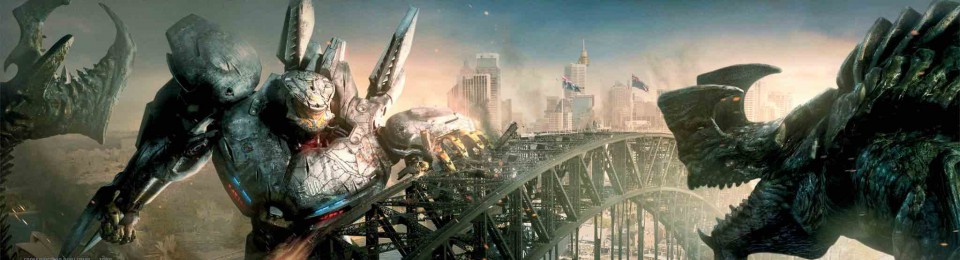
Images courtesy of Warner Bros. Pictures and Legendary Pictures.

Images courtesy of Warner Bros. Pictures and Legendary Pictures.

Grace: Chaos. Destruction. Ruin.

Why is it that we love to watch as our world falls apart? Whether it’s for real, like a riot in a far-off country or another celebrity splattering their bad choices all over the Internet like a monkey throwing its feces, we love to watch a train wreck. It’s why we crane our heads to see an accident on the highway on the way to the office, even though we know it’s making us (and everyone behind us) late to work. It’s why we laugh uproariously when some sixteen-year-old kid on Youtube flubs a skateboard trick and slams his junk against a metal bar, most likely making him a soprano for life. The Germans have a word for it: schadenfreude. It means, “taking pleasure from another’s misfortune.”

That basically defines the entire monster movie genre. Cities are leveled, lives are destroyed, and people run amok in the streets, screaming their heads off and looking for someone to save them. And someone will: a hero, marked by fate (or by the screenwriter), will stop the monster threat and save the city… or what’s left of it.

Continue reading

Community (Season 4)

by Thom Yee

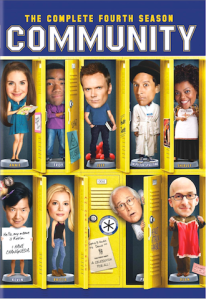
Community - season 4 front

Community images courtesy of Sony Pictures Television

For those of you who’ve missed out on one of the best sitcoms of all time (and for you, this, then, must be the darkest timeline), Community is ostensibly the story of Jeff Winger, an attorney disbarred for having a fake undergraduate degree who enrolls at Greendale Community College where he ends up forming a study group with six disparate students.  And as the years pass, these disparate students grow closer, as the study group becomes a surrogate family.

Really though, Community is about the conceits, tropes and conventions of mass media — movies and television especially.  Community is a satire of the sitcom genre, an examination of pop culture in general, and occasionally a profound critique of how we are all affected by the mass media we consume.  And it’s one of the smartest and most ambitious comedy series of all time. Or at least it was.

Continue reading

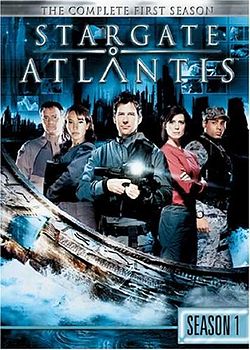
Stargate Atlantis (Season 1)

by Grace Crawford

All images courtesy of MGM.

All images courtesy of MGM.

Back in 2001, Disney released a little movie called Atlantis: The Lost Empire. It did pretty well at the box office, though it got mixed reviews and isn’t generally considered to be one of Disney’s better animated films. It, along with Treasure Planet and possibly a couple of movies I still haven’t seen, is part of a select group of films that draws on old stories—not fairy tales—and brings them to life in a highly stylized way.

But wait—that’s the wrong Atlantis, isn’t it? There’s an entire Wikipedia page dedicated to the occurrences of Atlantis in popular culture, and it’s because we are fascinated by it. An ancient city sinks beneath the waves and is never seen again—it may have been pride, misfortune, war, greed, fear, or a whole host of other things that caused the city to be destroyed.

Continue reading

Much Ado About Nothing (2012)

by Grace Crawford

All images courtesy of Bellwether Pictures, Lionsgate Films, and Roadside Attractions.

All images courtesy of Bellwether Pictures, Lionsgate Films, and Roadside Attractions.

I like Shakespeare. I always have. I know there are some who think he’s stuffy, pretentious, and the single leading cause of boredom among high school students. But I’ve just always liked him. I once played a witch in my school’s grade nine production of MacBeth (I’m not altogether certain what the fillet of a fenny snake is, nor what use eye of newt and toe of frog are for, but apparently it’s important for witchy things). I understood every word of Othello. I love writing a parody script of Twelfth Night. Had I not ended up in communications, I would have made an excellent English major and subsequent long-term barista/waitress.

I don’t really know how else one is supposed to begin discussing an adaptation of something, particularly when that something has already been adapted countless times over the years. In the case of Much Ado About Nothing, I thought Kenneth Branagh’s version hit the nail on the head. It was clever, well cast (with the exception of Keanu Reeves—not even high school students deserve to listen to his mechanically delivered lines for two and a half hours), and true to the source material. Whenever I think of how much I like Much Ado About Nothing, that’s the benchmark for me.

Continue reading

Simul-Review: Man of Steel

Tags

, , , , ,

by Thom Yee and Grace Crawford

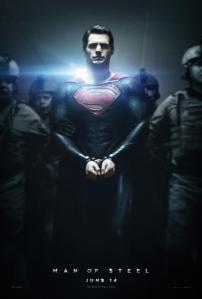
Man of Steel poster 1

All Man of Steel images courtesy of Warner Bros Pictures

Thom: The superhero concept has been around since 1938 and the debut of Superman in Action Comics #1. Superheroes have been with us long enough that, for a lot of people, they form a modern mythology more appealing than established faiths, a rich tapestry of stories instrumental in forming a set of core beliefs. Certainly for me, superheroes have been incredibly important and meaningful, and their stories have helped to inform who I am and most of everything I do. Of course, I would never claim that I regularly act heroically in any significant parts of my daily life, but every time I help someone out when I don’t need to, every small kindness, every moment of compassion comes from my view that good is its own reward and that we owe it to everyone to do right by them. And for me, most of those sensibilities came from reading comicbooks. If I was going to offer a theory on why superheroes endure in society and why, for many, they maintain fan followings into adulthood more so than many of the other elements of our childhoods, I would like to think it’s because they teach us about truth and justice in an unbreakable, intractable way; they help us to become the great people we can be and wish to be by giving us the light to show us the way. And in a world where religions destroy civilizations, where the Bible Belt won’t let go of its guns, and where priests are more associated with molestation than divinity, they do it in a way that we can actually be proud of.

Continue reading

Where’s the Justice (League)? The five things DC needs to do to get back into the movies

by Thom Yee

Let's pretend this didn't happen.

Let’s pretend this didn’t happen.

Green Lantern.  Its mere mention is enough to send shivers down the spines of comic book fans and moviegoers alike.  And it’s probably the reason we haven’t heard as much from Ryan Reynolds lately (R.I.P.D. not withstanding).

For my part… I didn’t hate Green Lantern.  On the plus side, Ryan Reynolds and Mark Strong were strong choices as Hal Jordan and Sinestro (spoiler alert Sinestro is sinister) and the basic plot was serviceable.  On the minus side, none of the characters were all that likable, the villains were either pathetic, uncompelling or poorly defined, the movie failed to capitalize on all the weird-looking aliens the way a lot of the marketing seemed to be going for, and I really just think the Green Lantern power set — which is basically a magic wishing ring — doesn’t translate that well to the screen.  You just don’t get that visceral thrill of people hitting each other (giant, green energy fists don’t count).  And Blake Lively was just awful.

Continue reading

Stardust

by Grace Crawford

poster

All images courtesy of Marv Films, Ingenious Films, and Paramount Pictures.

“A philosopher once asked, ‘Are we human because we gaze at the stars, or do we gaze at the stars because we are human?’ Pointless, really. Do the stars gaze back? Now that’s a question.”

I like fairy tales. I always have, and I’m not ashamed of it. I try to make a point of seeing all the new Disney movies in theatres, and I’ve done that ever since I first saw Pocahontas, and wow, does that ever make me feel old (even though I’m really not). I have a leather-bound book of fairy tales by my bed, I watch Once Upon A Time even though it’s not even that fantastic a show anymore, and I once appeared as the Wardrobe in my high school’s production of Beauty and the Beast. I like fairy tales, and I don’t expect that to change anytime soon.

Continue reading